Best Containers for Long-Term Food Storage
Mice, moisture and mayhem – the unholy trinity that can stop your food storage plans in their tracks. All of which are defeated by choosing the right container.
When people begin storing staple foods like rice and beans, one of the first questions that comes up is what kind of containers to use. Long-term food storage doesn’t require complicated equipment.
Understanding how the right containers work will help you choose the approach that fits your pantry, your space, and the amount of food you plan to store.
Why Containers Matter
Food lasts a long time when it is protected from the three main causes of spoilage:
- oxygen
- moisture
- pests
Containers act as the first layer of protection against those risks. The right container keeps dry foods sealed away from humidity, insects, and physical damage.
For most households, container choice becomes more important as food storage grows beyond everyday pantry quantities.
Mylar Bags
Mylar bags are one of the most common tools used in long-term food storage.
They are made from a durable layered material that blocks light and air much more effectively than regular plastic bags. When used with oxygen absorbers, mylar bags create a very stable environment for dry foods.
Mylar bags are often used to store foods such as:
- rice
- dry beans
- oats
- flour
- pasta
Because they are flexible, mylar bags are typically placed inside buckets or containers for additional protection.
Food-Grade Buckets
Food-grade buckets are widely used because they are inexpensive, durable, and easy to stack.
A standard five-gallon bucket can hold roughly:
• 30–35 pounds of rice
• about 30 pounds of dry beans
Buckets help protect food from rodents, physical damage, and accidental punctures.
Many people combine buckets with mylar liners and oxygen absorbers for the most reliable long-term storage.
Glass Jars
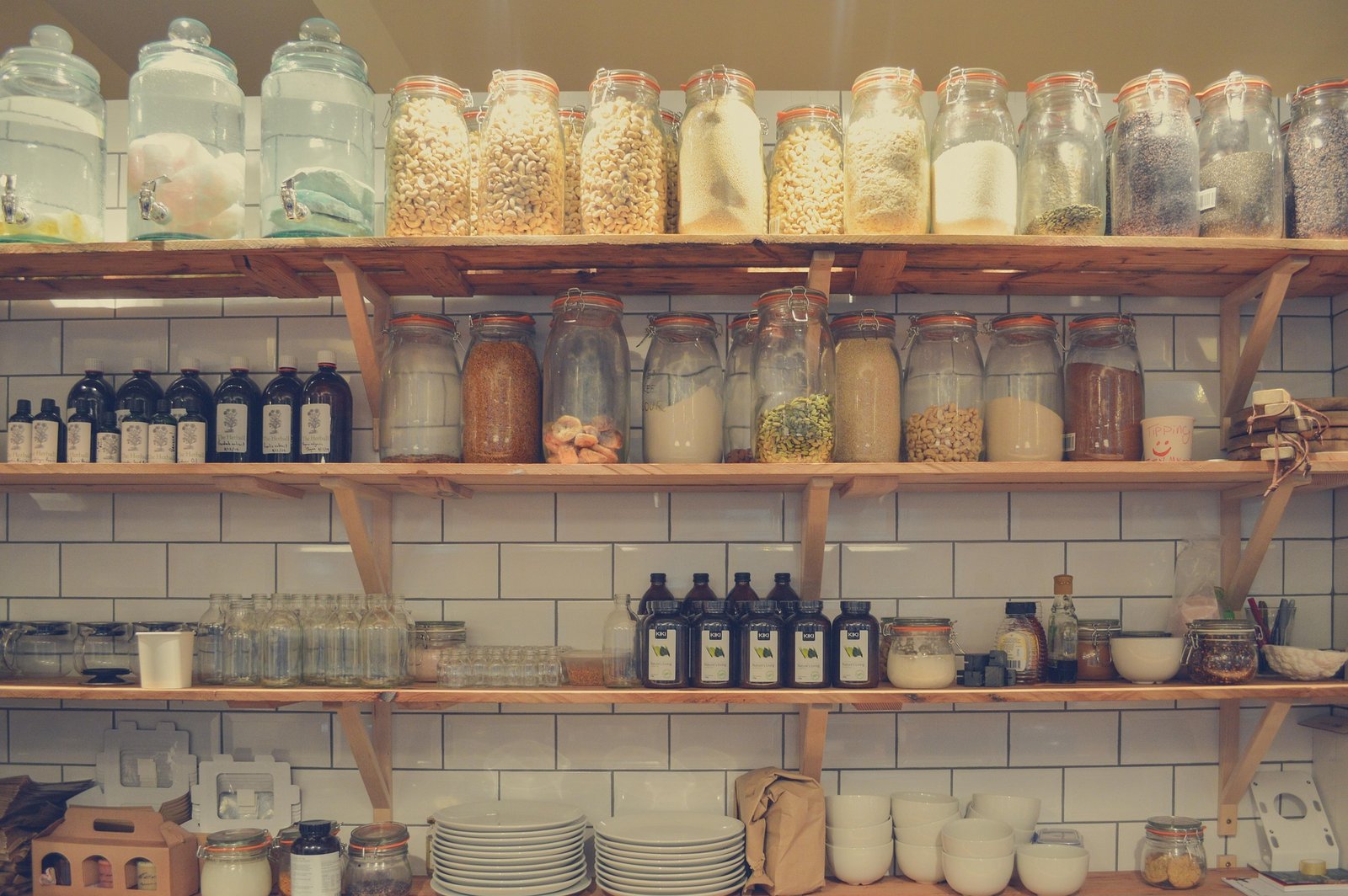
Glass jars work well for smaller quantities of dry food that you use regularly.
They are especially useful for:
- everyday pantry storage
- bulk dry goods that will be rotated frequently
- small kitchen storage systems
While glass jars are excellent for short- and medium-term storage, they are not usually used for multi-decade food reserves.
Vacuum-Sealed Bags
Vacuum sealing removes much of the air surrounding food and can extend shelf life for many dry goods.
This method works well for:
- smaller quantities
- foods you want to store in portions
- pantry organization
However, vacuum bags are less practical for storing very large quantities of staple foods.
My Take
If you’re just beginning to store staple foods, the simplest system is usually the best one.
A combination of mylar bags, oxygen absorbers, and food-grade buckets provides excellent protection and is relatively inexpensive to set up. Once you’ve stored a few batches of food this way, the process becomes very straightforward.
At the same time, it’s perfectly fine to keep smaller pantry quantities in jars or containers that you use regularly. Long-term storage and everyday kitchen storage can work together very naturally.
Choosing the Right System
The best storage system often depends on how much food you plan to store.
For small pantry systems, jars and containers may be enough. As quantities grow, buckets and mylar bags provide a much more durable solution.
Most households gradually build a mix of storage methods over time.
Related Guides
If you’re just starting to store staple foods, these guides may help:
How to Store Dry Beans Long Term
Both of these foods store extremely well when packaged properly and are often the first staples people add to a preparedness pantry.